Project
FujiView: Forecasting Scenic Visibility
Will you see Mount Fuji tomorrow? FujiView fuses live webcam imagery with weather data to forecast scenic visibility — published at WACV 2026.
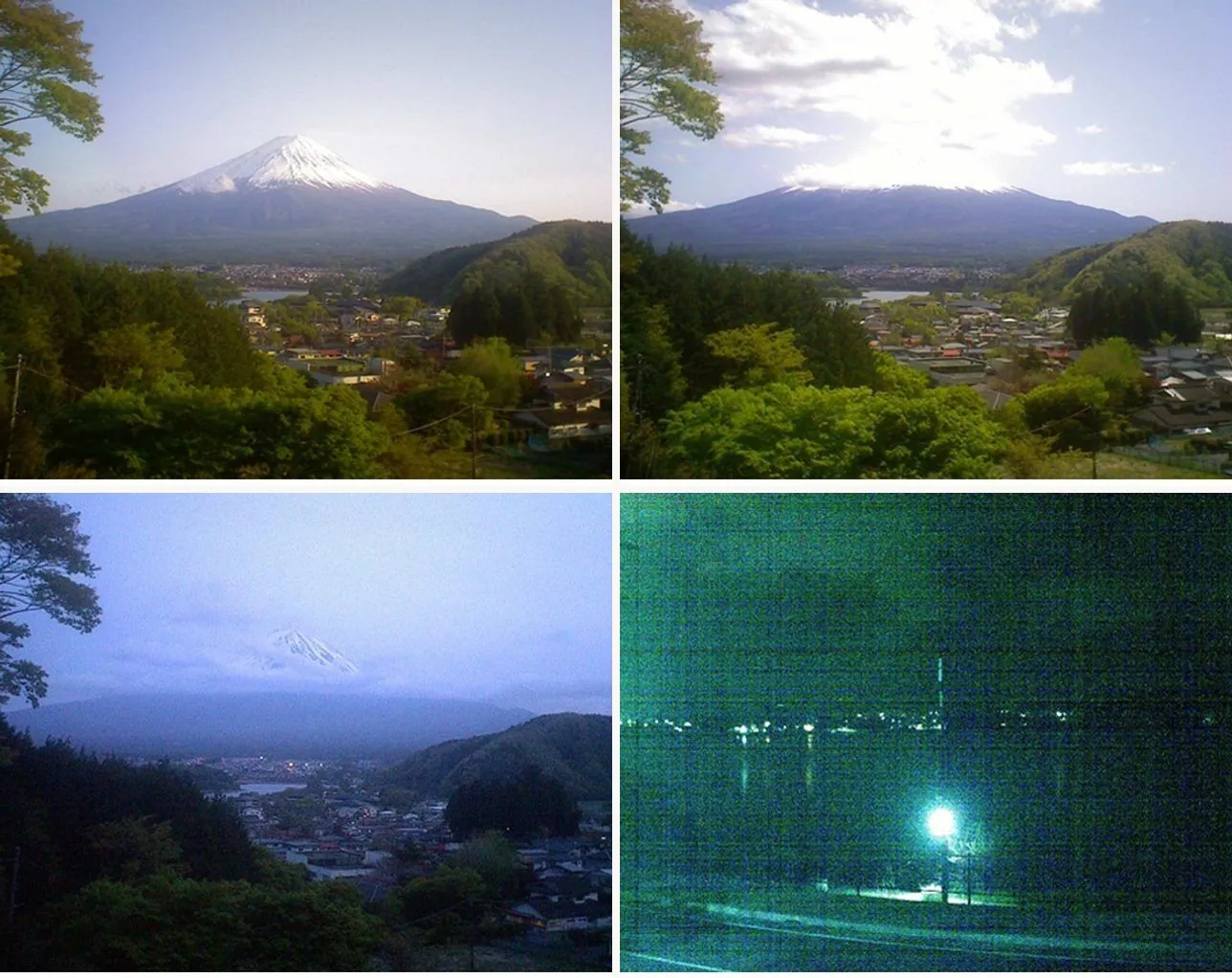
Millions of people travel to see Mount Fuji every year, and whether the mountain is actually visible on a given morning is a question of real consequence — for travelers, hotels, and tour operators. It is also a hard multimodal learning problem: visibility depends on atmospheric conditions that neither a camera nor a weather model fully captures alone.
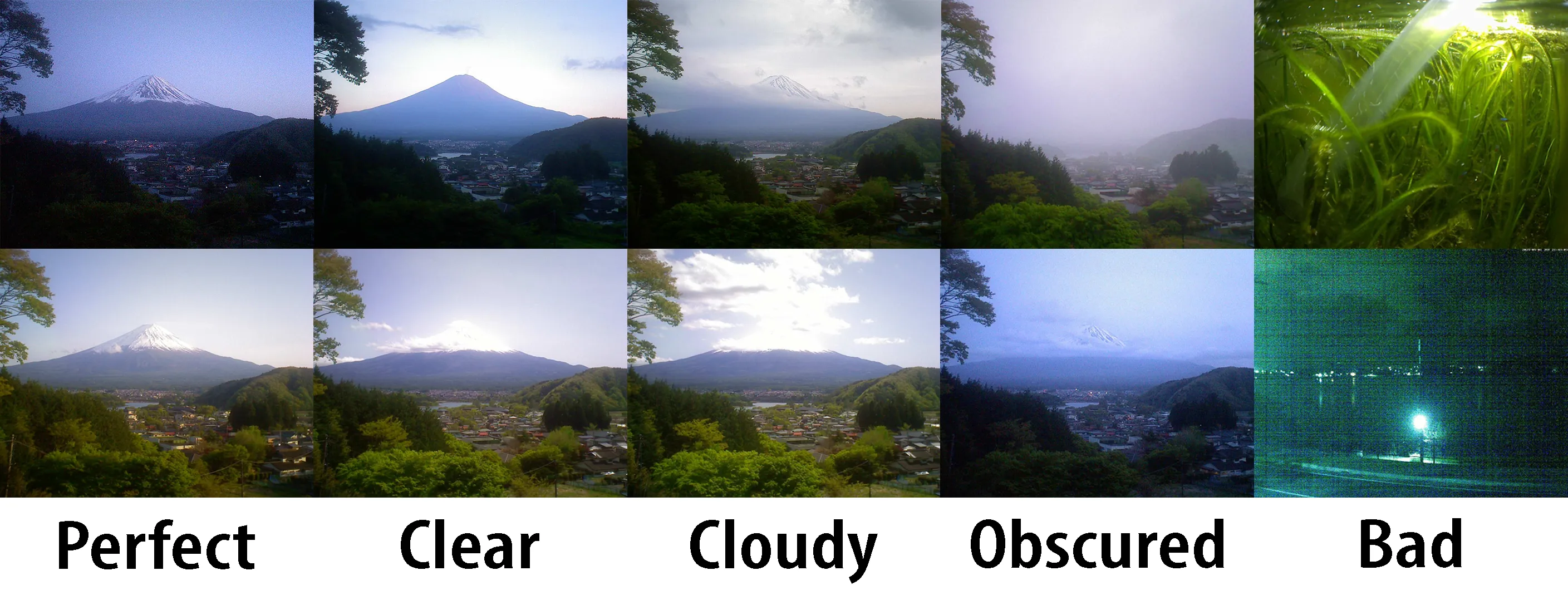
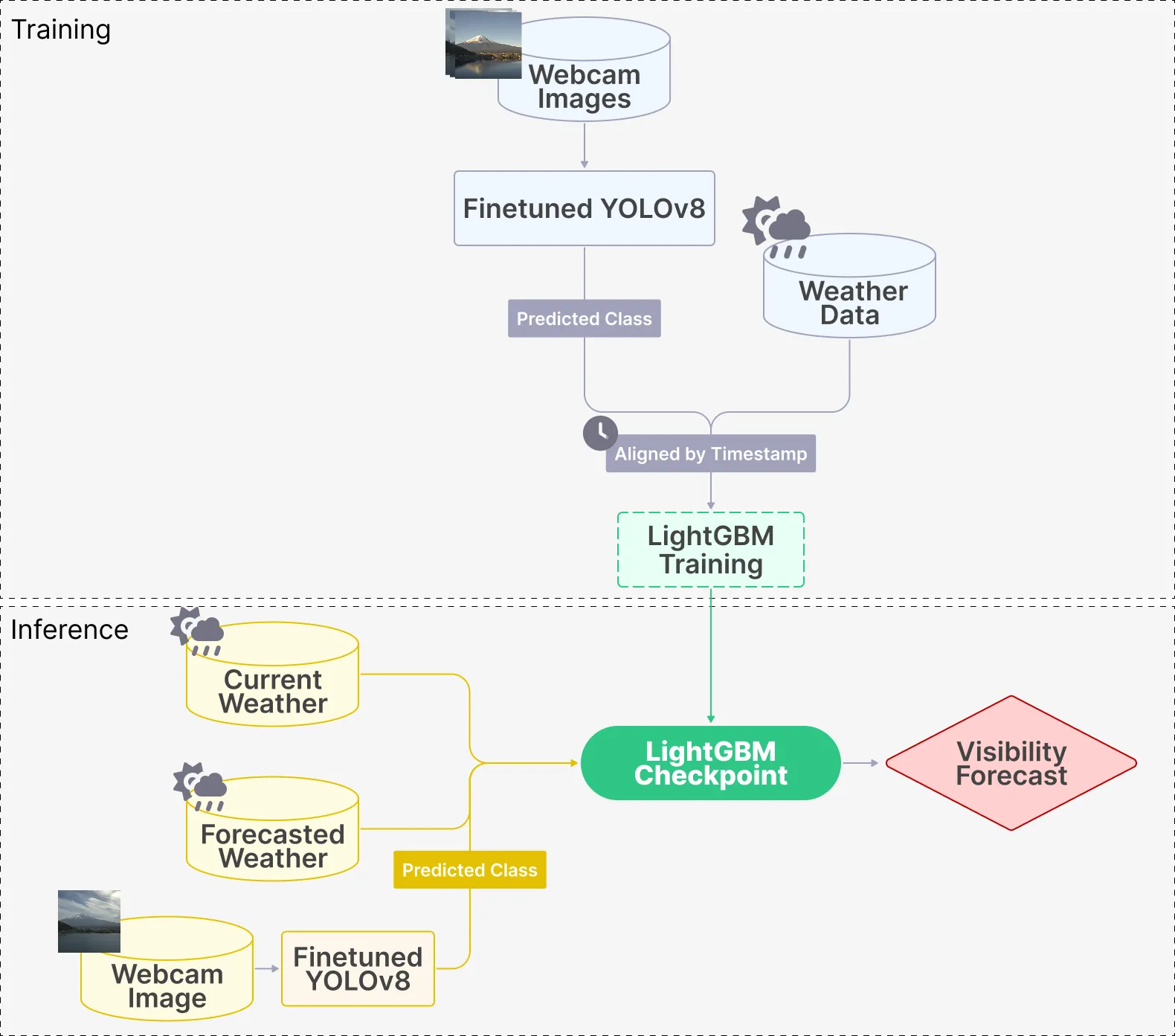
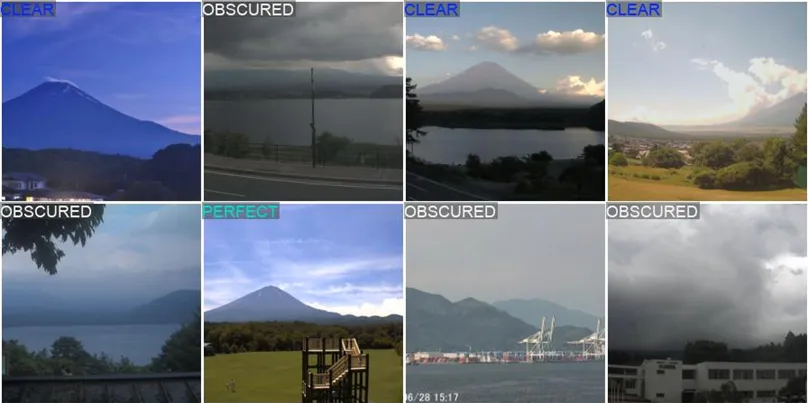
FujiView approaches it as a forecasting task. The system collects images from 42 public webcam viewpoints around Mount Fuji every 30 minutes and aligns each frame with concurrent and forecast meteorological data. More than 113,000 images have been collected, with roughly 26,000 hand-labeled into five visibility classes — Perfect, Clear, Cloudy, Obscured, Bad. A YOLOv8-based image classifier produces visibility probabilities that are late-fused with gradient-boosted models over numerical weather features to predict visibility at multiple horizons.
The central finding is a clean division of labor between modalities: vision features dominate nowcasting and same-day prediction (~89% same-day accuracy), while weather forecast features carry the signal beyond one day (~84% next-day accuracy). The work appeared in the main proceedings of WACV 2026.
The project is growing toward a public benchmark — targeting 300,000+ forecast-aligned images from 40+ webcams — with a public dataset, code release, and a traveler-facing web app in progress at fujiview.app.
Gallery
Publications
FujiView: Multimodal Late-Fusion for Predicting Scenic Visibility
IEEE/CVF Winter Conference on Applications of Computer Vision (WACV) 2026